
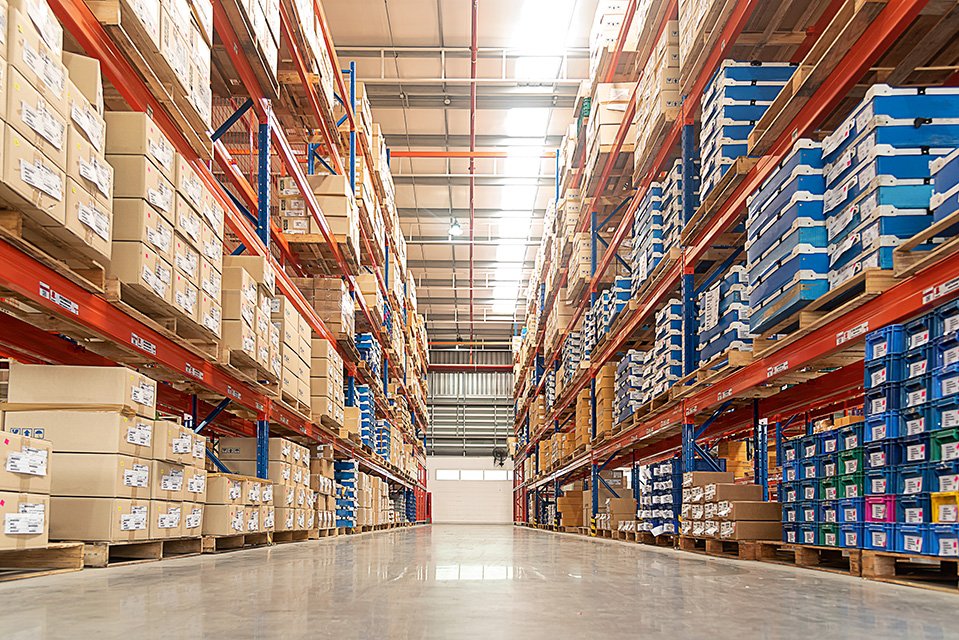
Warehouse Construction in Wyoming
Wind decides more of a Wyoming warehouse than the floor plan does. A box with a 30-foot sidewall and a few hundred feet of wall length catches a lot of air, and it catches it on a high, open site with nothing standing between the building and the weather. We start every warehouse job by asking what the wind, the snow and the frost will do to the structure, then we lay out the racking and the doors around the answers.
Most owners come to us with a storage problem they already understand: product is piling up, a lease is ending, or a haul from a distant supplier makes it worth holding more stock on site. What they have not priced yet is the drive. Concrete plants, steel fabricators and erection crews are not next door in most of this state, so mobilization, travel crews and long-lead steel go into the schedule on day one. Our warehouse construction work is built around that reality, and we put the haul in the number instead of leaving it for a change order.
A warehouse here is a simple building done carefully. The slab, the walls, the roof and the dock doors all have to survive a high-plains winter, and they have to be ready before the short building season closes.
Design loads and codes change from town to town
Wyoming has no single statewide building code. The International Code Council notes that cities and counties adopt and enforce their own, so the first call on any warehouse is to the local building department. Design loads follow the same pattern. Evanston's published sheet calls for a 100 mph basic wind speed with exposure B in the developed city and 110 mph with exposure C on the surrounding benches, a 40 psf minimum snow load that rises to 60 psf in basin areas, and footings at least 54 inches below finished grade. Laramie County lists 32 lb/ft2 ground snow and a 36 inch frost line.
Those numbers move the cost. A warehouse on an exposed bench in the west of the state needs a heavier roof and deeper footings than the same footprint on the eastern plains, and the engineer cannot guess which set applies. We pull the local criteria before we sketch a building, confirm the adopted edition and any local amendments with the building official, and carry the result into the structural drawings. That keeps the permit review short and keeps the bid honest.
What we build, from pad to dock door
The scope usually starts with the pad. We strip topsoil, bring in and compact structural fill where the soil asks for it, and set the building on footings that sit below the local frost line. Then comes the slab. Warehouse floors take forklift traffic, pallet-rack point loads and a lot of freezing and thawing at the doors, so joint layout, flatness targets and sub-base thickness get settled before anyone orders concrete. The concrete foundations trade partners handle footings, stem walls and the slab as one sequence.
Above the slab we build in steel or concrete, depending on the owner's clear height, wall length and budget. Many Wyoming warehouses go up as pre-engineered metal buildings because the package ships well and goes up fast. Taller or heavier-duty buildings may call for a different frame. We finish with insulated overhead doors, dock levelers where product moves on and off trailers, yard lighting and the truck court. We keep the dock layout matched to the trailers you will actually run.
Scheduling around the season and the road
The pour window drives everything. Concrete placed in a hard freeze needs blankets, heat and extra time, and none of that is free. When we can, we get the site work and the foundations in before the ground locks up, then close the building so interior slab work can run under cover. Steel packages are long-lead items, so we release the order as early as the permit allows. A late steel delivery can push erection into the first snows, and that costs more than almost any other slip.
Distance changes the calendar too. A crew based hours away does not drive home each night, so we plan travel crews, lodging and fuel into the schedule. Towns such as Gillette, sitting at about 4,554 feet on I-90, and Wheatland, where I-25 bypasses the town on the west and US 87 runs through it, are reachable on good highway. County roads to a rural site are another matter, and spring thaw can close them to loaded trucks. We ask about road restrictions before we set a mobilization date.
What moves a warehouse price in this state
Square footage is only the start. The line items that surprise owners are haul distance on steel and concrete, wind and snow design that run heavier at exposed sites, deeper footings where frost goes down, and winter protection for any concrete placed outside the shoulder seasons. Utilities matter as well. A site that needs a new water main or a long power extension carries that cost before the first wall goes up, which is why site development and utilities belong in the first conversation and not the last.
We price the building in plain categories so you can see where the money goes and where it can move. Clear height, door count, insulation level and slab thickness are all choices, and each has a visible price. If your product does not need a 36-foot clear height, we say so. If a lower eave saves wind load and money, we show you. Owners who plan to lease the space to a logistics tenant should also read our notes for logistics and distribution users, because tenant needs set what the building must do.
Choices to make before we break ground
A few decisions early save a lot of rework. Pick the product type and the racking plan first, since they set clear height, column spacing and floor loading. Decide whether the building needs heat or only freeze protection, because that changes insulation and the mechanical package. Decide how much yard you need for truck turning and trailer parking. The distribution center model adds cross-docking and more doors, and some owners find that a plain storage warehouse is the better fit for their volume.
We also like to talk about the next building. Wyoming owners often expand in phases, and a wall that can be removed later costs far less than one that was never planned for it. We set utility stubs, drainage and the slab edge with the next bay in mind, so growth does not mean tearing out what you just paid for.
Tell us what you need to store
Send us the product, the footprint and the site. We will tell you what the wind, frost and haul will do to the number, then give you a plain budget and schedule. One phone call starts it.
Questions Owners Ask
Do I need a different warehouse design in Evanston than on the eastern plains?
Often yes. Evanston's design sheet calls for a 40 psf minimum snow load and footings at least 54 inches deep, and Laramie County lists 32 lb/ft2 ground snow and a 36 inch frost line. Those differences change steel weight and foundation depth. We use the published criteria of the jurisdiction where the building will stand, never a state average.
Can a warehouse be built through a Wyoming winter?
Yes, with planning. Site work and foundations go in before hard freeze when the schedule allows, and the building is enclosed so slab work can run under cover. Concrete placed in cold weather needs heated enclosures, blankets and longer cure times, and we price that in. The risk is a late steel delivery, so we order early.
How long does the permit take?
It depends on the local building department, because Wyoming has no single statewide code and each city or county reviews its own. Some jurisdictions are mid-way through adopting the 2024 code family, so we confirm the edition in force on the day we apply. Complete drawings that already use local snow, wind and frost values move through review fastest.
What does travel add to the budget?
For a remote site, it adds travel crews, lodging, fuel and longer deliveries for steel and concrete. We list these as their own line so you can see them. Nearby subcontractors, where they exist, can lower the number, and we check for them before we price.
Should we build now or wait for spring?
If the permit is in hand and steel can ship by early fall, starting now can get the building enclosed before deep winter. If steel is delayed, waiting for the shoulder season usually costs less than fighting frost. We lay out both schedules and let you compare them.