Industrial Support and Commercial Construction in Wheatland, Wyoming
A power station keeps a long list of buildings busy around it: warehouses for spare parts, shops for maintenance crews, offices for contractors and training space for new hires. That is the work we plan for in Wheatland. Laramie River Station in Platte County is a 1,710 MW coal-fired plant operated by Basin Electric Power Cooperative with about 300 workers. It was commissioned in 1980, its last unit came online in 1982 and its emissions control equipment became operational in 2019. A plant that size draws outage crews, vendors and supply trucks, and each of them needs a place to work.
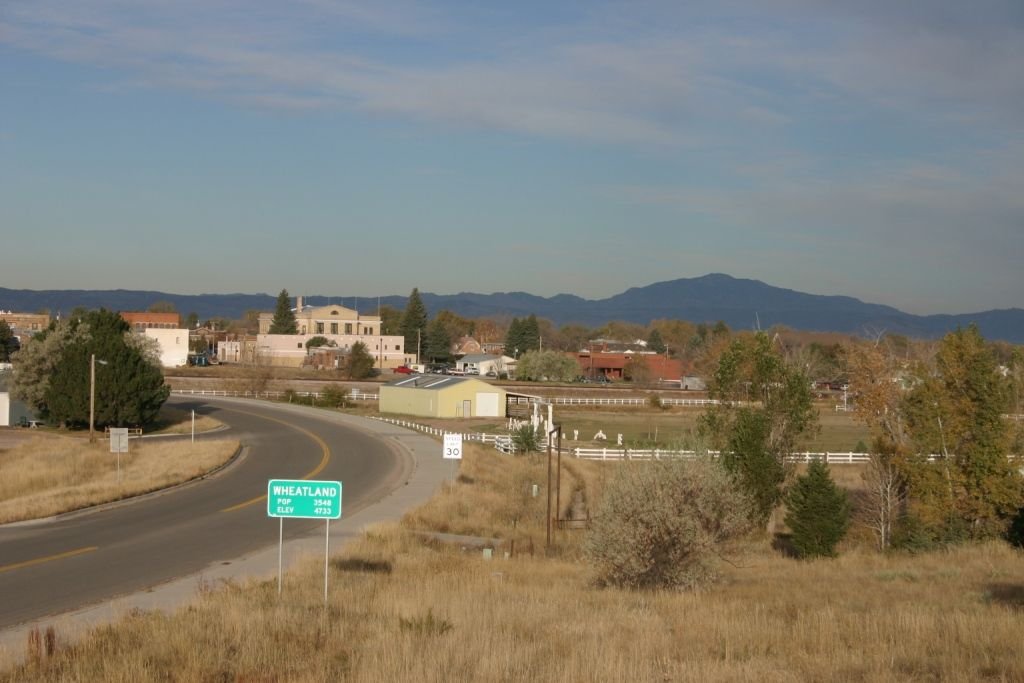
Wheatland is the Platte County seat at 4,751 feet, about 65 miles north of Cheyenne on I-25. The interstate bypasses the town on the west, US 87 runs north-south through it, and Wyoming Highways 310, 312, 316 and 320 reach out into the county. That road network gives an owner real choices. You can take frontage on US 87 for visibility or a parcel off a county route for truck room, and we help you weigh the two before you buy.
Wheatland is about an hour up I-25 from Cheyenne, so mobilizing here does not carry the travel penalty that jobs further north do. We price the short drive honestly and pass the saving on. A short haul also means a missing part or a short pour can be fixed the same day, which is worth real money on a tight schedule.
What a generating station does to nearby demand
Plants like Laramie River Station run on planned outages, and the buildings around them have to be ready before the outage crew arrives. A contractor that rents a yard needs a heated shop and a locked parts room. A vendor that stocks for the plant needs a dock, a slab that takes a loaded forklift and a mezzanine for small parts. We build those spaces to be useful on day one, and we leave room on the lot to grow when the next outage cycle asks for more.
Training and education follow industry. Eastern Wyoming College operates an outreach center in Wheatland, and the town had 3,588 residents in the 2020 census. A town this size can support only so many classrooms and shops, so we design flexible rooms and build once. If your program belongs to an education institution, we handle the same procurement and closeout steps the college expects.
Outage season also changes how we schedule. When a vendor needs a building by a given outage date, we work back from it: slab, steel, enclosure, utilities, then the occupancy inspection. We tell you which step is the long pole, usually the steel delivery, and what it costs to push it. If the date moves, we show you the tradeoff before you commit money to overtime or a second crew.
Concrete and steel under one schedule
We schedule and supervise the footings, slabs and aprons on a Wheatland job, and we coordinate the steel frame erection. Managing the concrete and steel closely is how we hold the schedule when the weather is marginal. We do not wait for a subcontractor to find a gap in his calendar, and you deal with one foreman who has the authority to decide.
The slab matters most for plant-support buildings. Vendor warehouses and parts shops see forklifts and pallet jacks all day, so we specify joints, reinforcement and a finish that will not dust under traffic. For a storage and distribution warehouse that gets truck traffic, we also design the apron to take the loaded turning movement that tears up thin concrete.
Shops, warehouses and contractor yards
The usual Wheatland scope is a steel building on a slab with an office, a dock or overhead doors, a fenced yard and the utilities to serve it. We also build offices for contractors who rent space for a season and then want to own. The yard is where owners underspend and regret it, so we price the base course, drainage and truck courts and dock aprons as a real part of the budget.
We will tell you when an existing building is the better buy. If a steel building in town has the clear height and doors you need, a refit may beat new construction, and we price that comparison before you commit.
Offices deserve the same attention as shops. A contractor's office near a plant is where drawings get reviewed and safety paperwork gets signed, so we give it dependable heat, good lighting and a layout with a real meeting table and a place to hang gear, not a leftover corner of the shop.
Town, county and the codes that apply
Wyoming has no single statewide building code. Cities and counties adopt and enforce their own, so the jurisdiction on your parcel decides what we design to. A lot inside the town limits follows the town's process. A lot out on a county route follows the county's. We confirm which applies and who inspects before we price anything.
Our permitting and entitlements work includes the access permit for a driveway onto a state highway like US 87, the utility connection approvals and the stormwater plan. These approvals set your start date, so we begin them while the drawings are still in progress. Utility providers in rural counties can need weeks to schedule a service drop, and we ask for the date on day one.
Site work, then the building
Most Platte County parcels need grading, a gravel base and an extension of water, power or both before a slab can go down. The site development and utilities trade partners handle that work as part of the same contract, which avoids the finger-pointing that comes when a site contractor and a building contractor disagree about elevations.
If your program spans more than one town, we also work in nearby Guernsey and Torrington, where the same crew and the same details carry across sites.
Build in Wheatland
Tell us the lot, the use and the date you need it working. We will price the building, the yard and the site work together and show you the schedule.
Questions Owners Ask
Can you build near the power station while it runs an outage?
We build on separate lots and outside the plant fence, so our work does not interfere with the outage. When a project borders plant access roads, we coordinate truck routes and quiet hours with the owner and adjust deliveries around crew shift changes.
How far is Wheatland from your project team?
About 65 miles up I-25 from Cheyenne. That is roughly an hour, so travel and mobilization costs are modest. We still list them separately in the estimate so you can see exactly what the drive adds.
Is US 87 frontage worth paying extra for?
Frontage helps a business that depends on walk-in customers. A contractor yard or a parts warehouse often does better on a cheaper lot off a county route with room to turn trucks. We lay out both options with driveway permits and site costs before you decide.
How long does a simple steel shop take to build?
Steel lead time is the first variable, so we order early. Once the package is on site, a basic shop shell goes up in weeks, followed by slab finishing, doors and interior work. We give you a written schedule that names each of those steps.
Do I need a town permit or a county permit?
It depends on where the parcel sits. We check the jurisdiction map and confirm with the local building office before design starts, so the permit you file is the one that applies.