Commercial Construction in Wyoming
Before we price a commercial building in Wyoming, we ask three questions that have nothing to do with the floor plan. How far is the site from the nearest ready-mix plant? Whose snow, wind and frost numbers govern the footings? And which inspector signs off, and how long is that drive? The answers move the budget more than most finish selections do.
The numbers are not uniform. Laramie County lists a 32 lb/ft2 ground snow load, a 105 mph wind design speed and a 36 inch frost line depth. Evanston requires footings at least 54 inches deep and a 40 psf minimum snow load. A building that works in one place has to be re-engineered in the other, and an owner who prices from a drawing set done for a different county gets a surprise at bid day.
We build ground-up commercial work for commercial real estate developers, owners and operators across the state. That covers offices, retail, restaurants, clinics, hotels, storage and public buildings. We run it as one job from early estimating through closeout, and we plan crew travel, material hauls and winter protection into the schedule from day one.
What drives commercial demand across the state
Wyoming commercial work follows the interstates and the energy economy. Cheyenne sits where I-25 meets I-80, with Union Pacific and BNSF both running through town. North Range Business Park, owned by Cheyenne LEADS, holds 21 sites on 620 acres with immediate access to I-80, and its tenants include Microsoft, NCAR/UCAR and the Walmart Distribution Center. Office, service and support buildings gather around employers like those.
Out west, the demand comes from trona, power and wind. Four trona mines operate in Sweetwater County, and the Chokecherry and Sierra Madre wind project is under construction south of Rawlins. Workforce housing, restaurants, medical offices and retail follow those payrolls, and they follow them into towns where the nearest steel supplier may be two hours away. We price that distance into the bid instead of discovering it in month three.
What we build, from shell to turnkey
Our commercial scope runs from site work through foundations, structure, envelope, interiors and commissioning. We take on new shells, full turnkey buildings and tenant-ready spaces. Clients who already hold a design team can bring us in during schematic design to test the structure and envelope against local snow and wind numbers before drawings get expensive to change.
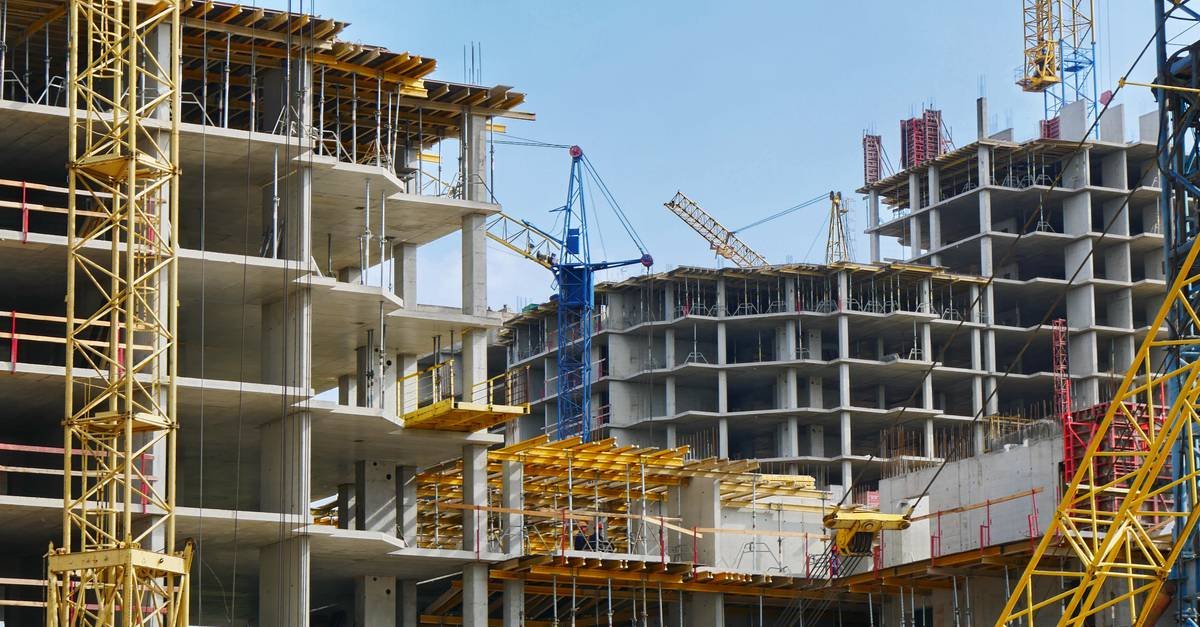
Most Wyoming commercial buildings end up as one of three structures: a steel frame with metal deck, a tilt-up concrete shell, or load-bearing masonry with a steel roof. Each has a different haul profile and a different winter risk. We pick the system on the numbers, and we put those numbers in front of you. The office building page and the retail center page show how that plays out for two common programs.
Codes, plan review and who answers the phone
Wyoming has no single statewide building code. The International Code Council states that codes are adopted and enforced locally by cities and counties, so requirements differ from one jurisdiction to the next. The state adopted the 2024 International Codes on June 28, 2024, and a locality that holds enforcement authority has six months to adopt or maintain standards that at least meet the state's. Laramie County adopted the 2024 codes with amendments effective January 1, 2025. We confirm the edition and the local amendments for each site before design is locked.
Plan review timelines depend on the office doing it. A city department with its own staff turns drawings differently than a county with one plan reviewer covering a wide area. We call the building department early, learn what they want on the first submittal and carry the review window in the schedule. Our permitting and entitlements work covers zoning, access permits off state highways and utility tap approvals as well.
How we run a Wyoming commercial job
We assign one superintendent to each project and keep that person on site through the critical sequences. When a project requires long-distance mobilization, a rotating cast of supervisors costs more than it saves. Crews travel in and stay for the work. We budget lodging and per diem as line items, not as a hidden margin.
We select concrete mixes, rebar placement and curing methods around the season the pour will land in. A footing poured in October needs blankets and heat. A slab poured in July needs wind and evaporation control. Where it fits the project, we recommend design-build delivery so the structural engineer, our estimators and our field team settle these questions together instead of passing them back and forth.
Seasons, steel lead times and the pour window
Wyoming gives most sites a pour window from late spring through early fall. We sequence site work, foundations and underground utilities to use that window fully, then close the building in before the first hard freeze. Structural steel, roof-top units, switchgear and storefront all carry lead times that matter more here, because a missed delivery in September can push enclosure into December. Our long-lead procurement process puts those orders on paper before drawings are complete.
Interior work can run through winter once the envelope is tight and temporary heat is in. A few sites are not accessible at all in deep snow or spring thaw, particularly on county roads, and we say so in the schedule rather than promising dates the road cannot honor. Developers who plan around those limits finish on time. Those who ignore them pay for winter conditions in general conditions and in lost rent.
Send us your site and your drawings
Tell us where the building goes and what it has to do. We will return a plain schedule, a budget range and a list of what could change either one.
Questions Owners Ask
Do you price differently for rural sites than for Cheyenne or Casper?
Yes, and we show you why. Mobilization, crew lodging, material hauls and inspection travel all grow with distance. We separate them in the estimate so you can see the cost of the location itself. On a site far from the interstate, those items can be a visible share of general conditions, and we would rather you see that number up front than find it in a change order.
Which code applies to my project?
It depends on the city or county that holds enforcement authority at the site. The State of Wyoming adopted the 2024 International Codes on June 28, 2024, but the Wyoming Department of Fire Prevention and Electrical Safety does not run every local building department. Cheyenne's building board, for example, noted in February 2025 that the 2018 Energy Code would remain in effect while a code package was before the governing body. We confirm the current local edition before we finalize design.
How do you protect concrete in cold weather?
We plan for it when the pour is scheduled, not the morning of. That means heated enclosures or insulated blankets, hot water or heated aggregate in the mix where required, and a curing log that the inspector can read. Subgrade gets protected from frost before the pour as well. If the cost of winter protection looks higher than waiting for spring, we will say so.
Can you work with an architect who is out of state?
We do it often. The usual problem is that a design done elsewhere uses the wrong snow, wind or frost values for the Wyoming site. We review the structural criteria early against the local jurisdiction's published numbers and send our questions to the engineer of record before drawings are finalized.
What should we have ready before asking for a number?
A site address or parcel number, a rough program with square footage, and any survey or geotechnical report you hold. If you have none of those, we can still give a range, but the range gets tighter as the soils and utility information arrives.