Distribution Center Construction in Wyoming
Two railroads and two interstates meet at Cheyenne, and that is the reason most large distribution centers in this state end up there. I-25 joins I-80 southwest of the city, Union Pacific and BNSF both run yards through town, and US 30, US 85 and US 87 add regional reach. An owner who wants to move freight in and out of the Rockies and the northern plains gets more options in one place than anywhere else we work.
The building still has to be built, and a distribution center asks more of a contractor than a plain warehouse does. Doors are numerous, trailer traffic is constant, floors take hard wheel loads and the whole site has to turn trucks without a jam. We treat the dock wall, the truck court and the slab as one design problem. Wind, frost and a cold season that cuts the pour window all push on that design, so we plan the sequence before we price the steel.
Our distribution center construction work covers the site, the shell and the dock equipment, and we stay on through closeout so the building is ready for product on the day you set.
Where the freight actually lands
The Cheyenne Logistics Hub covers about 2,000 acres southwest of the city, with access to both BNSF and Union Pacific, I-80 and I-25, a short-line operator, transloading and rail car storage. That mix suits users who move bulk goods by rail and finish by truck. North Range Business Park, owned by Cheyenne LEADS, has 21 sites on 620 acres with immediate I-80 access and nearby I-25 access, and its tenants include the Walmart Distribution Center.
Cheyenne Business Parkway, 900 acres just east of central Cheyenne, is not rail served, but it has high-volume natural gas, electricity and redundant fiber, and its tenants include Lowe's Regional Distribution Center. Rail or no rail is the first site question we ask. It changes the layout, the grading and the budget, and it decides whether you build a spur, a transload pad or a plain truck court.
Dock walls, truck courts and the floor in between
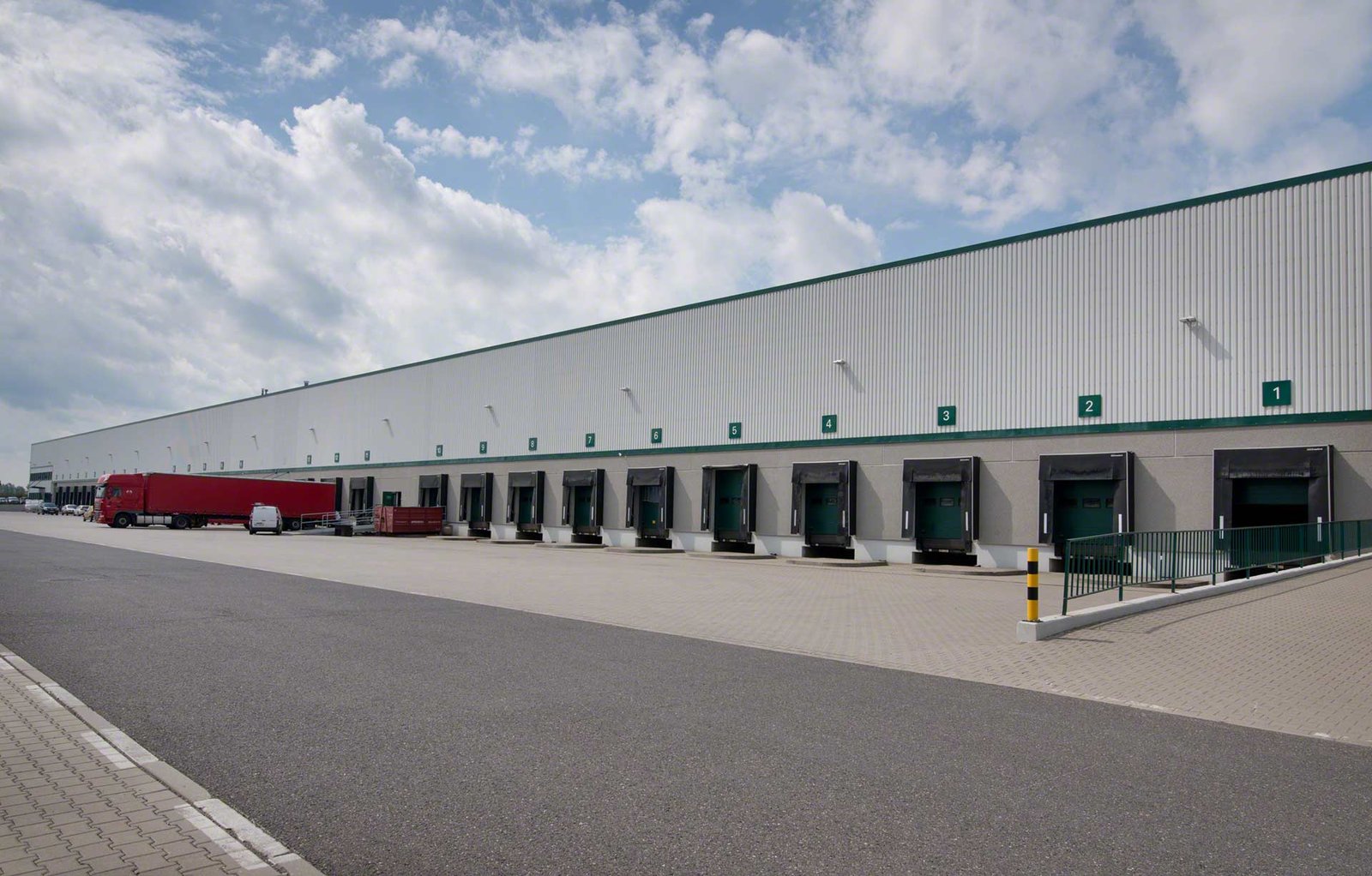
The dock wall is where a distribution center earns its keep. We set door spacing, leveler pits, trailer approach slopes and bumper locations so a driver can back in without a second try. Truck courts take the worst punishment on the site, so we build them with thick reinforced concrete at the dock apron, where trailer landing gear concentrates load, and use the right sub-base under the whole court. Our truck courts and dock aprons work gets the same attention as the building.
Inside, the slab is the product. Racking, narrow-aisle equipment and conveyor lines want flat, durable floors with joints that stand up to wheel traffic. We discuss racking heights and aisle widths with your operations team before the pour, because a slab placed for the wrong layout is expensive to fix. Many buildings go up as tilt-wall construction shells for strength and fire rating, and some use metal framing when speed and budget lead.
Reading the local code and the load tables
Laramie County, which surrounds Cheyenne, adopted the 2024 International Codes with amendments effective January 1, 2025. Its criteria table lists a 32 lb/ft2 ground snow load, 105 mph wind design speed and a 36 inch frost line. The City of Cheyenne has its own building department, and at its Board of Appeals meeting in February 2025 the Chief Building Official reported that a code adoption package was before the governing body while the 2018 Energy Code stayed in effect. Wyoming has no single statewide code, so the answer depends on which side of the city line the parcel sits.
We confirm the adopted edition, the local amendments and the design values before drawings go out. A distribution center is a large, high-occupancy-count building in a code sense, and fire protection, sprinkler design and egress for tall racked storage get early review. Getting those questions answered up front keeps permit review short.
Fitting a large building into a short season
Most distribution centers are big buildings, and big buildings need long steel and panel lead times. We order early and place the foundations before the ground freezes. When a tenant's lease date is fixed, we build the schedule backward from it and show you the points where weather could cost a week. Winter pours need protection, so we shelter and heat the slab areas and keep trades working inside once the roof is on.
Distance still matters, even close to the interstates. Fabricators and panel casters may be several hours from the site, and a concrete plant may not have the capacity to supply a large pour on a cold morning. We confirm plant capacity, trucking and backup supply before we set a pour date. That is the kind of detail that decides whether a week on the calendar holds.
Services that travel with the building
A distribution center rarely stands alone. It needs access roads, utility extensions, drainage and a parking field, and the order of that work shapes the whole job. Our long-lead procurement team locks in steel, panels and dock equipment, and the site development and utilities trade partners bring water, sewer, power and storm drainage to the pad.
Owners and developers who are building on speculation or for a named tenant will find our notes for commercial real estate developers useful, since lease terms, clear height and expansion plans drive the design. Operators who want a faster pick-and-ship building may prefer a logistics fulfillment center, which shifts the emphasis from pallets to parcels and mezzanines.
Plan your distribution center with us
Give us your door count, your trailer mix and the parcel. We will walk the site, read the local code and come back with a plain schedule and budget. One phone call gets it moving.
Questions Owners Ask
Is a rail-served site worth the extra cost?
It depends on what you ship. Bulk and heavy goods can save real money by moving on rail and finishing by truck, and the Cheyenne Logistics Hub offers both BNSF and Union Pacific access. Parcel and retail freight usually does not need rail. We price the spur and the transload pad as separate items so you can decide with numbers.
How many dock doors should we plan for?
Start from your peak day, not your average one. Count trailers in and out, then add room for growth. We would rather build the wall with knock-out panels for future doors than force you to cut into a finished wall later. Your operations lead and our superintendent should sit down together before we lock the layout.
What code applies to a building in Cheyenne?
It depends on the parcel. Laramie County adopted the 2024 International Codes with amendments effective January 1, 2025, while the City of Cheyenne runs its own adoption process. We call the building department before drawings are finished and use the edition and amendments that apply to your parcel.
Can we build in the winter?
Yes, but winter has a cost. Concrete needs heated protection, cure times stretch and short daylight cuts crew hours. If the lease date allows, we aim to get foundations in before freeze and enclose the building early so interior work runs under cover.
What happens if steel arrives late?
A late delivery can push erection into snow and wind, which is the costliest slip on this kind of job. We order as soon as the permit allows, track fabrication, and keep a plan for work that can proceed while we wait. You will hear about a slip from us the day we learn of it.