Logistics and Fulfillment Center Construction in Wyoming
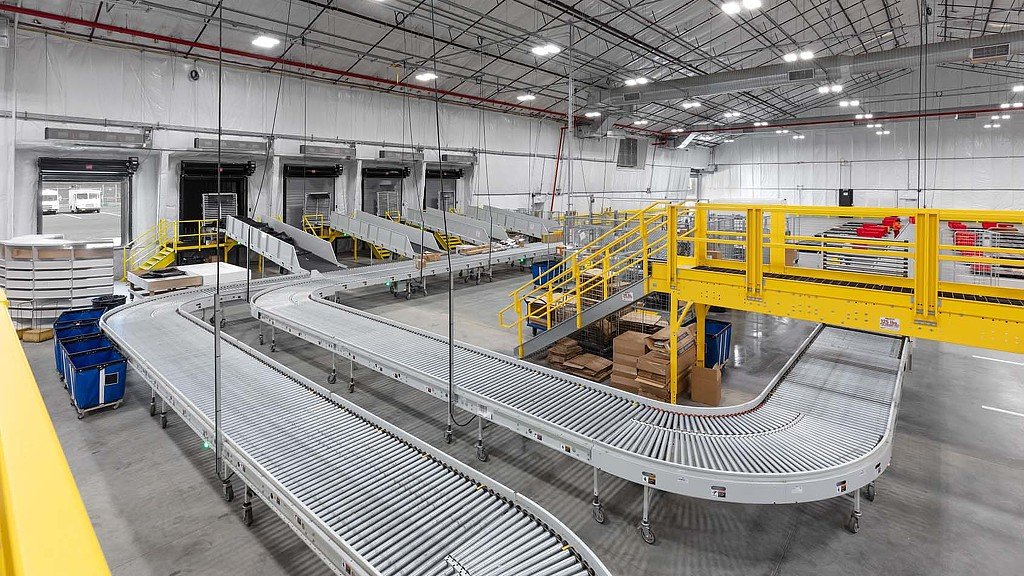
Order cutoff time, not square footage, sets the size of a fulfillment center. If a customer who orders by afternoon expects the parcel to leave that night, the building has to pick, pack and stage faster than a plain warehouse ever would. That pushes everything into the design: mezzanines, conveyor lines, pack stations, sort areas, parcel docks and a lot of power and data.
A Wyoming site adds a few twists. Distances are long. A trailer headed for the far corners of the state spends hours on the road before it reaches a customer. Parcel carriers set pickup times, and a winter storm can close a highway for part of a day. We design buildings with extra staging room, so a delayed pickup does not choke the dock.
Our fulfillment and logistics center construction services cover the shell, the mezzanines, the slab and the site, and we coordinate with your automation vendor on everything the conveyor touches.
Decisions that set the building
Start with the order profile. Many small parcels per day need a different building than a few large pallets. Automation changes the slab tolerance, the column spacing, the roof loads and the electrical service. A sorter or a robotic picking system wants a flat, level floor and stable support for mezzanine columns. Returns processing needs its own space and its own flow.
Then we look at labor. A fulfillment center employs far more people per square foot than a storage warehouse, so parking, break rooms, restrooms and entry security matter. In a small labor market, owners often need to offer easy access and a comfortable building to hire and keep staff. We design the front of the building as carefully as the back.
The state's logistics assets
Cheyenne's business parks house distribution and retail operations. Cheyenne Business Parkway, 900 acres east of central Cheyenne, lists Lowe's Regional Distribution Center and Sierra Trading Post among its tenants, with all utilities in place including high-volume natural gas and redundant fiber. Casper-Natrona County International Airport has a 10,165 foot runway and FedEx Express cargo service, and Energy Transportation Inc., a logistics firm, is headquartered in Casper.
Laramie sits on I-80 and US 287 at about 7,165 feet, with the Union Pacific mainline through town. Together these places show where parcel and freight networks already touch the state. We match your service promise to a site that gives you carrier access, power and a workforce, and we tell you plainly when a location will cost you more in drive time than it saves in rent.
What we manage inside the box
The slab is the first piece of the machine. We specify and inspect it to tight flatness and levelness targets, saw the joints at the right time and protect it from rack and conveyor installation damage. We frame and set mezzanine supports, install the structural steel and pour the mezzanine deck. Managing the concrete and steel trades as one scope means fewer interfaces and a cleaner handoff to your automation vendor.
We also set rough-ins for the loads that follow: embeds for equipment, sleeves for conveyor crossings, pads for compressors and power conduit routes. Retrofitting those after the pour costs a lot. If your building is a conversion, the renovation and adaptive reuse trade partners can cut, reinforce and patch an existing slab and strengthen the roof for new loads.
Fire protection, egress and local review
High-piled storage and dense mezzanines draw close attention from fire officials. Sprinkler design, smoke control, egress width and rack height limits all come up in review. Wyoming has no single statewide code, so the city or county decides which edition applies. The International Code Council notes that building codes in the state are adopted and enforced locally, so requirements vary by jurisdiction.
Plan review moves faster when the design team brings the rack layout, the commodity classification and the sprinkler design to the first meeting. We also coordinate with the utility on service size, since automation and charging equipment raise the load. Snow and wind design follow the local sheet. Laramie County, for instance, lists a 32 lb/ft2 ground snow load and 105 mph wind design speed. We work from the number the building department gives us.
What a fulfillment budget includes
The shell is the smaller part of many fulfillment budgets. Automation, racking, electrical service and fire protection can exceed it. Our job is to hold the shell, slab and site costs steady, give you clear numbers on power and data, and warn you early about cost swings in steel and concrete. We list haul and mobilization separately for remote sites.
Phasing is a good tool here. A first phase might include the shell and part of the interior fit-out, with automation added as volume grows. We plan structure and power for the final build and install only what you need today. Retail brands rolling out regional hubs should read about our work for retail chains, and our warehouse page explains the simpler storage alternative.
Neighbors on the same campus
A fulfillment center usually shares its parcel with a truck court, trailer parking, an office and employee parking. The truck terminal and cross-dock page explains the freight-handling side of that yard. For site work, the parking lot construction trade partners build employee and visitor lots to handle snow storage and drainage.
If you are comparing sites in the Casper area, we are glad to walk several. Our Casper and Laramie pages cover local conditions, and we are happy to compare them with a Cheyenne parcel before you decide.
Plan your fulfillment center
Send us your order profile, your automation plan and your target sites. We will describe what the haul, the power and the season do to the schedule. One phone call is all it takes to start.
Questions Owners Ask
How tall should a fulfillment center be?
It depends on the storage method. Pick modules with mezzanines use a lot of floor and moderate height, while pallet racking uses height. We set the clear height from your inventory profile and the automation you plan to install. Raising it later is far costlier than choosing it right at the start.
How much power do we need?
More than a normal warehouse. Conveyors, sorters, charging stations and refrigeration for some products all draw large loads. Get your vendor's numbers early and ask the utility about lead times. Service upgrades can take months, and they can set your schedule.
Can an old warehouse be converted?
Often yes, if the slab, roof and fire protection can carry the new loads. We survey the building, test the slab and review the sprinklers before you commit. Sometimes conversion saves money, and sometimes a new building is the cheaper route.
What about carrier pickup in winter storms?
Plan extra staging room and a flexible shipping window. A storm can close a road for a day, and trailers back up. We design the dock with enough depth to hold a delayed day's volume without blocking operations.
Where should we locate in Wyoming?
That depends on where your customers are. Cheyenne offers interstate and rail access, Casper has an airport with cargo service, and Laramie sits on the I-80 corridor. We compare drive times, labor and utility costs for each and give you a straight answer.