
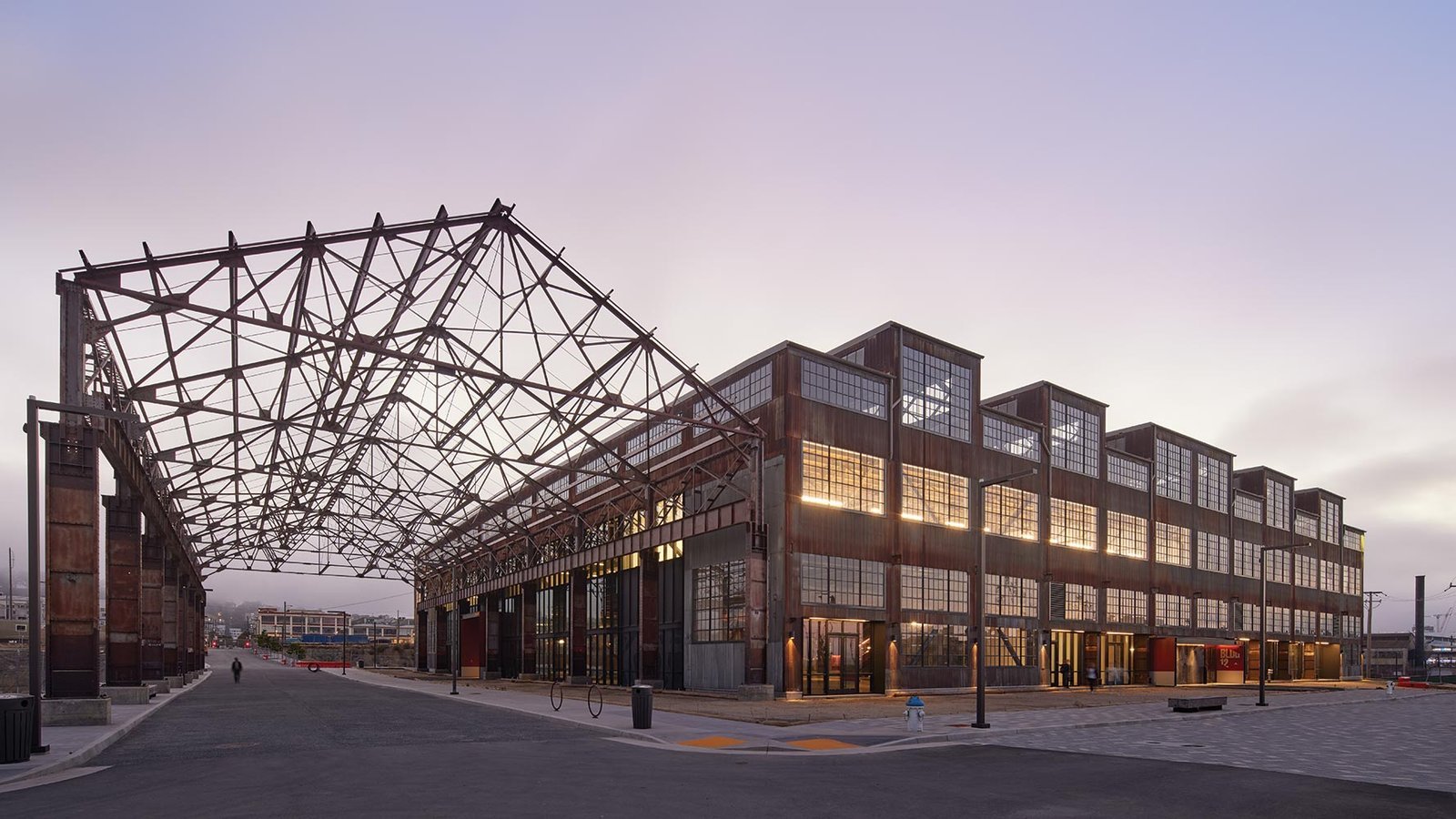
Renovation and Adaptive Reuse in Wyoming
A building that has stood through a hundred Wyoming winters has already passed a test that a new one has not. That is the argument for reuse, and it is also the warning. The envelope may be tired, the wiring may be old and the structure may carry loads nobody wrote down. We renovate and repurpose existing commercial and industrial buildings, and we begin by finding out what is really there.
The state has plenty of candidates. Evanston began as a Union Pacific divisional point, with a machine shop and roundhouse added in 1871, and the Union Pacific Railroad Complex is on the National Register of Historic Places. Bar Nunn was built around the runways of Wardwell Field, Casper's original airport, whose old runways now form its street pattern. Near Gillette, Campbell County approved rezoning nearly 1,500 acres of the Coal Creek mine to heavy industrial, keeping the coal tipple, rail lines and buildings in place for future tenants.
Each of those is a lesson in reuse. Old structures have value and quirks, and they come with a regulatory path that is different from new construction.
Why Wyoming reuses buildings
Distance makes new construction expensive. Materials, crews and equipment travel far, and winter limits the work. An existing building has a roof, a floor and a set of walls already in place, which cuts those costs. In towns with a small tax base, keeping a building in service is often the practical choice.
Industrial change adds more. Mines, plants and refineries shift over time, and their buildings find new uses or sit empty. The Naughton Power Plant on the southwest edge of Kemmerer was scheduled to stop burning coal in 2026. Torrington's sugar plant closed in early 2019. Those facts show how the state's economy moves and why we keep a method ready for converting large, durable structures to something new. Our demolition work handles the parts that cannot be saved.
The existing building code path
Wyoming adopted the 2024 International Existing Building Code as part of the state code family on June 28, 2024, and the state rule incorporating the 2024 editions lists the International Existing Building Code alongside the building, fire, mechanical and fuel gas codes. As with all Wyoming codes, local adoption and enforcement vary, so your building department decides which edition and amendments apply.
The existing building code gives owners options. Depending on the extent of work, a project may be treated as a repair, an alteration, a change of occupancy or an addition, and each has different upgrade triggers. A change of use from storage to a restaurant, for instance, can trigger fire separation, egress and accessibility work. We map those triggers at the start, with the design team, so the budget includes them.
From survey to turnover
We start with a survey: structure, envelope, roof, utilities, hazardous materials, floor loads and clear heights. We open walls and ceilings where we can. We confirm drawings against reality, and we record what we find. Then we plan the work in layers: selective demolition, structural repair, envelope upgrades, new systems, interior fit-out and finish.
Common work includes new roofing, insulation, windows, doors, mechanical and electrical upgrades, fire protection, accessibility improvements and structural strengthening. Many projects turn old shops, depots and warehouses into offices, studios, hotels or mixed-use buildings. Others modernize a flex or light industrial building for a new tenant.
Surprises behind the walls
Every renovation carries unknowns. Asbestos in old insulation or floor tile, lead paint, deteriorated wood, rusted steel, buried tanks and undocumented additions are all common. We test for hazardous materials before demolition, and we plan abatement with licensed specialists. Structural members need field checks. A beam that looks sound can have a hidden crack or rot at a bearing point.
Winter exposure is another concern. An old building with a new hole in its roof loses heat and gets wet. We phase the work so that the envelope is never open longer than necessary. We keep temporary weather protection ready, and we watch the forecast. Energy codes also come into play: new insulation and air sealing may be required, and we choose methods that work with old walls without trapping moisture.
Working in old structures
Old buildings can be unstable once the load changes. Removing a wall, a floor or a roof section can shift forces in ways the drawings do not show, so we shore, brace and sequence work with an engineer. We control dust, protect workers from hazardous materials and manage fire watch during hot work in old timber or dry framing.
Access and egress during construction need attention. Old stairs and floors may not carry construction loads. We set temporary stairs, guardrails and floor protection, and we keep the site secure. Some buildings sit in historic districts, which adds review and material requirements, and we plan for them. The same steps apply when an old building becomes a hotel, and our hotel construction planning builds them into the production schedule.
Where the money goes
A reuse budget is built from the inside out. Unknown conditions get a contingency, and the contingency shrinks as we open walls and test materials. Envelope upgrades, mechanical and electrical systems, and code-driven changes are the largest items. Historic or special finishes add cost where owners want to keep them.
Reuse is not always cheaper than new construction. It tends to win when the structure is sound, the location is valuable and the new use fits the existing layout. It loses when the building needs a full new structure and envelope. We help owners compare both, including multifamily developers who weigh conversion against ground-up housing.
Walk the building with us
If you own an old shop, depot, warehouse or plant building, invite us out. We will tell you what is salvageable and what is not. We serve owners of old buildings in Evanston, Bar Nunn and Sinclair.
Questions Owners Ask
Is it cheaper to renovate than to build new?
Sometimes. It depends on the structure, the envelope and the new use. A sound building in a good location can save money and time. A building needing new structure and envelope is often a wash. We price both so you can compare.
What does the existing building code change?
It lets the project follow rules designed for work in existing buildings. The upgrades required depend on the type of work and the change in use. Wyoming adopted the 2024 International Existing Building Code at the state level, and local departments adopt it on their own timelines.
How do you handle asbestos and lead paint?
We test before demolition and use licensed abatement contractors for removal. Results go into the project record. Owners should budget for abatement in older buildings built before the 1980s.
Can we keep a building in service while renovating it?
Often, yes, with phasing. See the cost and schedule effects before choosing. Some systems have to be shut down at times, and we plan those outages carefully.
Will the building be warm enough for winter?
We design the envelope and systems to the local climate and test them before turnover. Insulation, air sealing and mechanical capacity are checked against the local design values.