Commercial and Industrial Demolition in Wyoming
Taking a building down is a construction project with the order reversed. The last thing built is the first thing removed, and every load path the engineer designed has to be understood before a piece comes off. We handle selective demolition inside buildings, full structure removal, concrete and slab removal, and site clearing for commercial and industrial owners in Wyoming.
The reasons vary. In Torrington, the sugar plant closed in early 2019. The Naughton Power Plant at Kemmerer was scheduled to stop burning coal in 2026. Mines, refineries, depots and farm-service buildings across the state outlive the businesses that built them. Owners need the ground cleared, the hazards handled and the debris moved without ending up in a regulatory problem.
Wyoming adds its own conditions. Landfills can be far away, so haul distance and disposal fees drive the cost. Winter freezes debris into solid masses and makes surfaces dangerous. Wind spreads dust and light debris across a wide area. We plan around those facts from the start.
Hazards first, then the machines
Before anyone touches a wall, we need a hazardous materials survey. Asbestos in insulation and flooring, lead in paint, PCBs in old light ballasts, mercury in switches, refrigerants in equipment and fuel or chemicals in tanks are all possible in older buildings. A licensed specialist surveys and the owner receives a written report. Abatement comes before demolition, done by licensed contractors, with disposal documented.
Then we make the structure safe. Utilities are disconnected and verified dead. Gas, power, water, sewer and communications are capped at the right points with the utilities' own crews. We write a demolition plan that sets the sequence, the equipment, the exclusion zones, the dust and water control and the engineered shoring where needed. Everyone on the job knows the plan before the machine starts.
What we take down and how
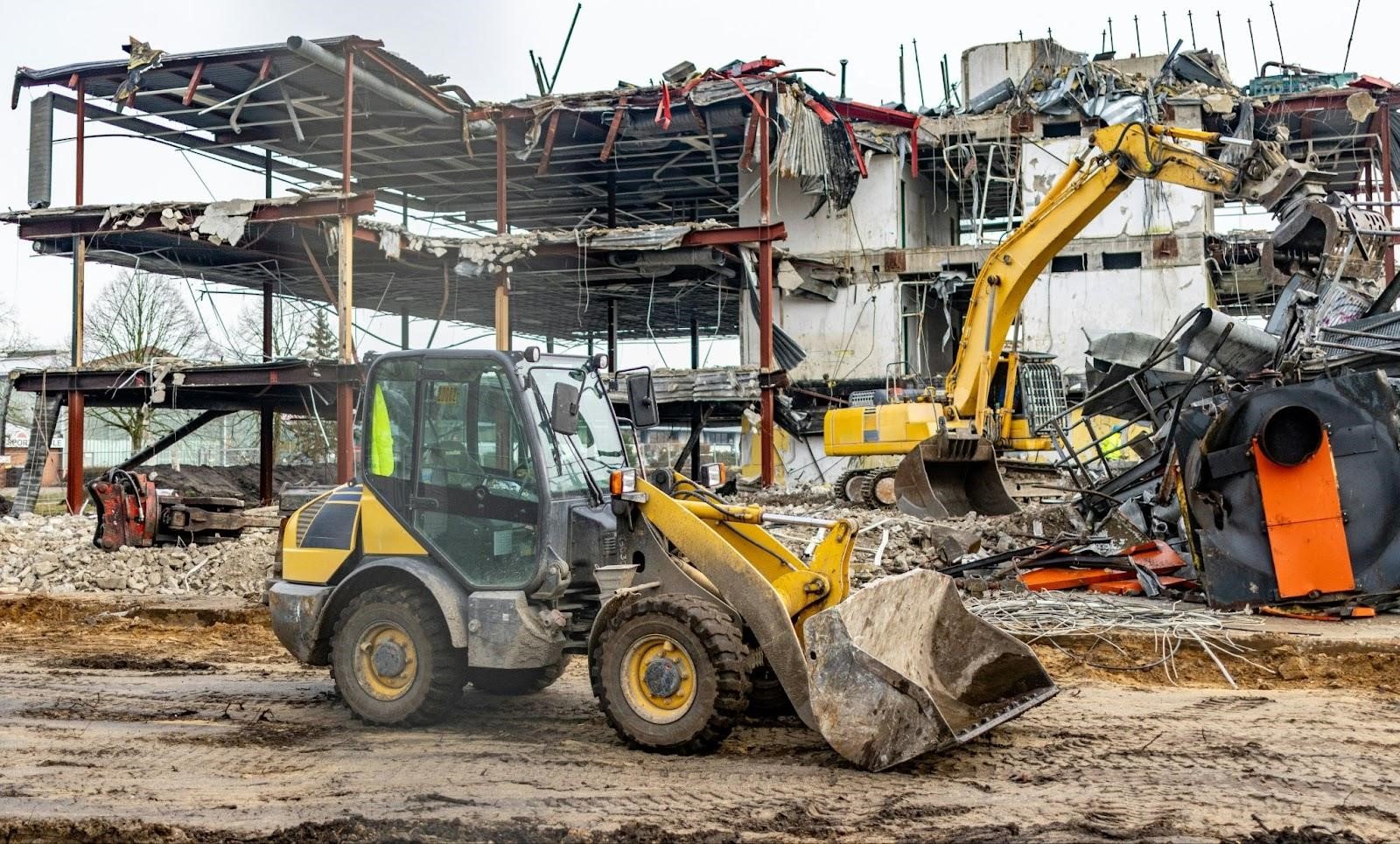
Methods follow the structure. Wood and light steel buildings come down with excavators and shears. Heavy concrete gets processed with hydraulic breakers, crushers and saws. Tall steel is dismantled piece by piece or dropped in controlled ways under an engineered plan. Interior selective demolition uses hand tools and small machines so the rest of the building survives. Slabs and foundations are broken, hauled and either crushed for reuse or taken off site.
We separate material as we go. Clean concrete, steel, copper and other metals are recovered when the market makes sense. Mixed debris goes to approved disposal. For owners preparing a site for new construction, demolition connects to mass grading and the filling of basements, tanks and trenches. For buildings that will live again, selective work supports renovation and adaptive reuse.
Permits, notices and records
Demolition needs a permit from the local building department, and Wyoming has no single statewide building code, so requirements vary by jurisdiction. Some towns require utility disconnect letters, asbestos survey reports and a traffic or street closure plan. Federal rules call for notification before certain asbestos removal and demolition work. Environmental oversight may apply to sites with industrial history.
Records matter. We keep the survey, the notices, the abatement manifests, the disposal tickets and the permit sign-offs in a closeout file. If a property changes hands later, a buyer will ask for them. The Mystery Bridge and U.S. Highway 20 Superfund site in Evansville, where groundwater contamination is believed to come from former industrial operations, is a clear example of why former-use history matters before any ground is disturbed.
Haul, landfill and site conditions
Distance dominates. A mile of haul in a city is a different problem from a hundred miles on a rural highway. We figure truck counts, cycle times and disposal fees before we price. We look for local places that accept clean concrete and rock, which are cheaper than a full landfill. We look at rail yards, mine lands and farm properties where material can be reused on site.
Neighbors matter too. A demolition next to an occupied building needs vibration limits, dust control and noise windows. Near the roads, we plan traffic control. Old industrial sites can contain buried tanks, foundations and utilities that no drawing shows, so we probe and uncover before we commit to a final price. Where the property is a mine or a plant, the public sector owner may add reporting steps that we plan for.
Timing around weather and the next project
Demolition schedules are short compared with construction, but they set the date for everything after them. We try to finish demolition and site clearing in the fall before frozen ground, so the owner can start foundations as soon as the spring thaw allows. Winter demolition is possible, but frozen debris, ice and short days slow production.
We coordinate with the next phase. If a new building will take the place of an old one, the demolition contractor and the builder share the survey, the utility locations and the soil information. When both are us, the handoff is built into one schedule. For plant and factory owners, owners in manufacturing are best served by treating equipment removal, building demolition and new construction as a single plan.
Who calls us for demolition
Developers clear sites for new buildings. Industrial owners remove retired plants and equipment. Public agencies take down unsafe or surplus structures. Property owners tear down fire-damaged or abandoned buildings that the local government wants gone. Each has a different process, and we match it.
Some owners are preparing a site for a manufacturing plant or food and beverage processing facility and need the old structure cleared by a date certain. We schedule the work in reverse from that date, and we deliver a clean, graded site with all documents.
Tell us what comes down
Send photos, a survey and the building age. We will walk the site, review the hazards and give you a price for clean removal. We also take calls from owners in Torrington and Kemmerer, where industry is changing and old plants need new plans.
Questions Owners Ask
Do I need an asbestos survey before demolition?
For most commercial and industrial buildings, yes. Federal rules require an inspection before demolition, and the survey tells you what must be removed first. We coordinate with licensed surveyors and abatement contractors.
Can materials from the building be recycled?
Often. Clean concrete can be crushed for base material, and steel and other metals have scrap value. We separate the streams on site and track the tickets. Recovery does not always cover the cost, but it reduces disposal fees.
How much does demolition cost?
It depends on the size, the construction type, the hazards and the haul to disposal. Disposal and hazard abatement can outweigh the cost of tearing down the building. We give you a line-item price that separates them.
Who disconnects the utilities?
The utility companies disconnect at the street or the meter, and we cap and verify inside the property. We request disconnects early because utility scheduling can take weeks in a small town.
Can you demolish in winter?
Yes, with adjustments. Frozen debris is heavy and slippery, and the days are short. If your schedule allows, we prefer fall for demolition and spring for new work.