
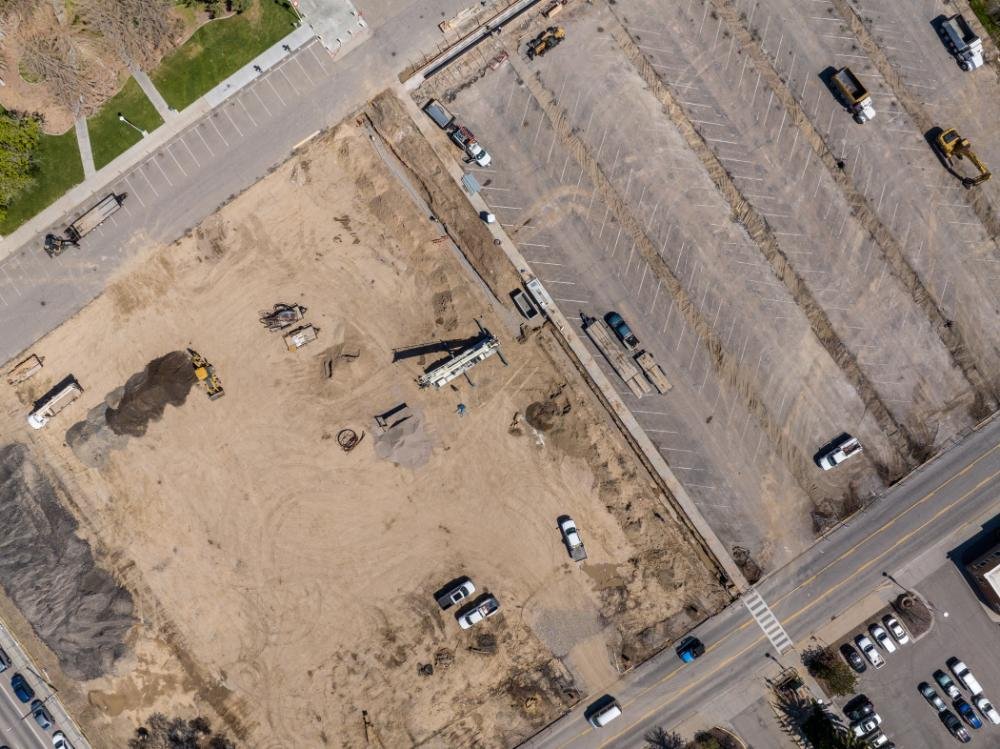
Parking Lot Construction in Wyoming
A Wyoming parking lot is a snow storage yard first. Afton averages about 87.8 inches of snow a year. Jackson averages 78.2. A parking lot in either town is a snow storage yard for five months, and the layout either allows for that or fails. We build parking lots for retail, offices, clinics, hotels, schools and light industrial owners across Wyoming, and we begin every one by asking where the snow will go.
The answer shapes everything else. Stall counts, drive aisle widths, curb types, light pole bases, landscape islands and drain inlets all get tested against a plow blade. An island with a tall curb and a tree in the middle of the lot collects snow in a pile and makes the lot smaller every winter. A lot that drains toward the building floods the entrance as the pile melts.
Paving in this state is also a race against the calendar. Asphalt plants open for a short season, and cold mix is not a substitute for a real paving window. We schedule the base and the utilities so that paving can go the moment a plant opens and the weather agrees.
Base, paving, striping and the details
A parking lot package begins with subgrade preparation and aggregate base, then adds asphalt or concrete paving, curb and gutter, sidewalks, accessible ramps, striping, signage, wheel stops and lighting bases. Drainage inlets and storm lines go in before paving, which ties this work to our stormwater and drainage installation.
Asphalt is the default for stalls and light traffic. Concrete is better where trucks turn or where a heavy dumpster pad sits. We ask the owner what vehicles use the lot, including delivery trucks and snow equipment, and we design the pavement section around the heaviest regular load, not the average car.
Cost, section and life-cycle
Pavement cost is mostly thickness, base and haul. A thicker base and thicker asphalt cost more at the start and save money over twenty years. An undersized section looks good in the first year, then ruts, cracks and heaves after a few freeze-thaw cycles. We show owners the cost difference in plain numbers and let them choose with the full life in mind.
In areas far from a plant, hot-mix has to travel and stay hot, and that adds cost and limits the paving day. Remote sites need larger minimum orders, and mobilization gets spread over fewer square feet. A small lot for a rural clinic may cost more per stall than a big retail lot. We explain that early. Medical campuses and office users that need quick turnover often ask for staged lots, which we plan with the medical office building schedule.
Snow storage, curbs and frost
Frost is the silent partner. Water that gets into the base freezes, expands and breaks the pavement from below. We build free-draining base, set subdrains where the ground is wet, and grade to keep water moving. Sundance sees about 81 inches of snow a year in the Black Hills, and that meltwater has to leave the lot quickly or it refreezes at the entrance.
Curbs matter too. A tall, square curb chips under a plow. A rolled or mountable curb takes the hit and lives longer. Light pole bases should be tall enough to be seen under a drift and protected from the blade. Striping paint wears under plows, so we recommend thermoplastic where budgets allow. Our parking structure builds deal with the same winter problems on a vertical scale.
Lots for different buildings
A hotel in a mountain valley wants a lot that works under snow and has room for guest vehicles and trailers. A clinic wants short walks and accessible spaces near the door. An office wants a clear entrance and a lot that does not turn into a skating rink. Retail wants visibility, easy turns and fast plowing. We read the building first.
Cody sits near the east entrance to Yellowstone, with health care and retail among its largest employment sectors, and its summer traffic is heavy. Lots there have to handle summer visitors in RVs and winter locals in pickups. For office buildings, the weekday pattern is more predictable, and we size and stripe accordingly.
Reaching the lot
We drive to the work. Wyoming towns are far apart, and a paving crew with a roller, a paver and a screed is not something you can send on a single day's notice. We bundle paving across nearby projects whenever possible, which cuts mobilization and speeds your schedule. If you have several lots in one region, tell us. We can often combine them.
The same crew can handle new lots, overlays, patching and sealing. In places such as Jackson, where private land is scarce and a lot must be used well, we help owners pack more stalls into tight sites. Retail and hospitality customers can see more about that approach under hospitality groups.
Fitting paving into a short season
Asphalt wants warm ground and dry weather. Many Wyoming projects get a window from late spring to early fall, and the best paving days are in summer. We plan paving to land after the building is closed in, with deliveries of heavy materials finished, so trucks do not tear up the new surface.
We often pave a base coat early and a final coat late. That lets the building trades work over the lower lift and gives the owner a clean wearing surface at opening. When the season ends before the lot is done, we leave a safe temporary surface, not a half-finished one. For multi-site owners, see how we handle repeat work in multi-site rollouts.
Tell us where the snow piles up
Share the site plan and tell us who plows. We will look at stalls, drainage and storage together and give you a real number. We also build lots near Jackson and Star Valley, where snow depth decides the layout.
Questions Owners Ask
When can asphalt be placed in Wyoming?
Generally from late spring through early fall, when ground and air temperatures allow compaction before the mat cools. The plant's season also limits things. We check plant dates early and book the paving crew with the first possible window.
Asphalt or concrete for my lot?
Asphalt is the usual choice for stalls and light traffic. Concrete is better where trucks turn, where dumpsters sit or where you want a longer life with less maintenance. Many lots use both.
How do you plan for snow storage?
We mark storage areas on the plan, usually in corners or landscape zones away from inlets and doors. We set curbs and grades so melt drains away from the building. We also tell your plow contractor where to pile.
Why do lots crack after a few winters?
Usually water in the base. If it freezes it lifts the pavement, and if the base is too thin, traffic does the rest. A well-drained base and proper thickness prevent most early failures.
Can you phase a lot around an open business?
Yes. We split the lot into sections, keep an entrance open and sequence paving by area. It takes more planning and a little more cost, and it keeps your customers parking.