Construction for Logistics and Distribution Owners in Wyoming
A shipper choosing a Wyoming site is really choosing a route. Interstate 80 crosses the south of the state and I-25 runs north to south, and the Union Pacific and BNSF lines cross at Cheyenne, where both operate railyards. Freight passes through this state on its way somewhere else, and the owner who wants to catch some of it needs a building at the right exit, with the right apron and the right winter plan.
We build warehouses, distribution centers, cross-docks, fulfillment buildings and cold storage for logistics owners, third-party operators and regional distributors. Your concerns are cycle time, dock count, trailer parking, labor and what happens when I-80 closes for wind or snow. Ours are floor flatness, truck court strength, drainage, snow storage and the date your racking installer shows up.
Distribution buildings look simple, and that is why the mistakes are expensive. A trailer court that is a few feet too shallow slows every driver for the life of the building. A slab that was poured in a hurry in December cracks in March. We spend our time on the details a tenant will notice in the first week.
Interstate closures, wind and where the trucks go
Wyoming's interstates close for weather, and a distribution building has to work during a closure. That means trailer parking that can hold more than a normal day's volume, driver amenities and enough yard lighting and plowed space to hold vehicles until the road opens. We design the yard for winter, not for a clear August afternoon.
Wind affects dock doors, rooftop equipment and light-gauge walls. A dock seal that works in calm air can fail in a steady gust. We detail doors, canopies and roof edges with local wind values from the building department, and we tell you what the design numbers are. Laramie County, which surrounds Cheyenne, lists 105 mph wind design speed and a 32 lb/ft2 ground snow load.
Rail, highway and air in the state
The Cheyenne Logistics Hub covers about 2,000 acres southwest of Cheyenne with access to both BNSF and Union Pacific, I-80 and I-25, a short-line operator, transloading and rail car storage. About 1,500 of those acres were unsold and unoccupied as of the December 2022 report. A rail-served lot is a different product from a highway-only lot, and the site plan changes accordingly.
Elsewhere the pattern is narrower and more regional. Rock Springs, at 6,388 feet, sits on I-80 with Union Pacific freight service. Evanston began as a Union Pacific divisional point, and Union Tank Car repairs railroad tank cars there. In Casper, the Wyoming Business Council approved $617,483 for roughly 30,000 linear feet of fiber optic cable around the airport business park, which matters to an operator with automated systems. The Casper trade partners know that corridor.
Concrete, sitework and steel under one schedule
A distribution project is mostly concrete and steel. We manage grading, drainage, foundations, slabs, tilt panels and truck court paving where a crew can reach the site, and we coordinate steel erection for clear-span frames. When we control the slab and the court, we control the quality of the places that take the most wear.
Truck courts and dock aprons need thicker sections and careful joint layout. Landing gear loads concentrate and cause rutting in asphalt and spalling at joints. See our truck courts and dock aprons work for how we design those sections. In freeze-thaw climates we pay attention to subgrade drainage, because water under a slab is the usual cause of early failure.
Hitting a lease commencement or a peak season
Distribution tenants often need to be operating before a peak season. That means the racking installer, the dock equipment supplier and the conveyor vendor are all on the same calendar as the roof crew. We lay out a trade-by-trade schedule and share it with those vendors. If the building is released in pieces, the racking installers can start in a finished zone while we complete the rest.
Long-lead items such as dock levelers, overhead doors, transformers and rooftop units are ordered as soon as the design allows. Warehouse construction schedules also depend on the season: we aim to place slabs and tilt panels in warm months and to have the building dried in before snow. For cold chain, cold storage construction adds insulated slabs and vapor barriers that extend the timeline.
Buildings for each part of the supply chain
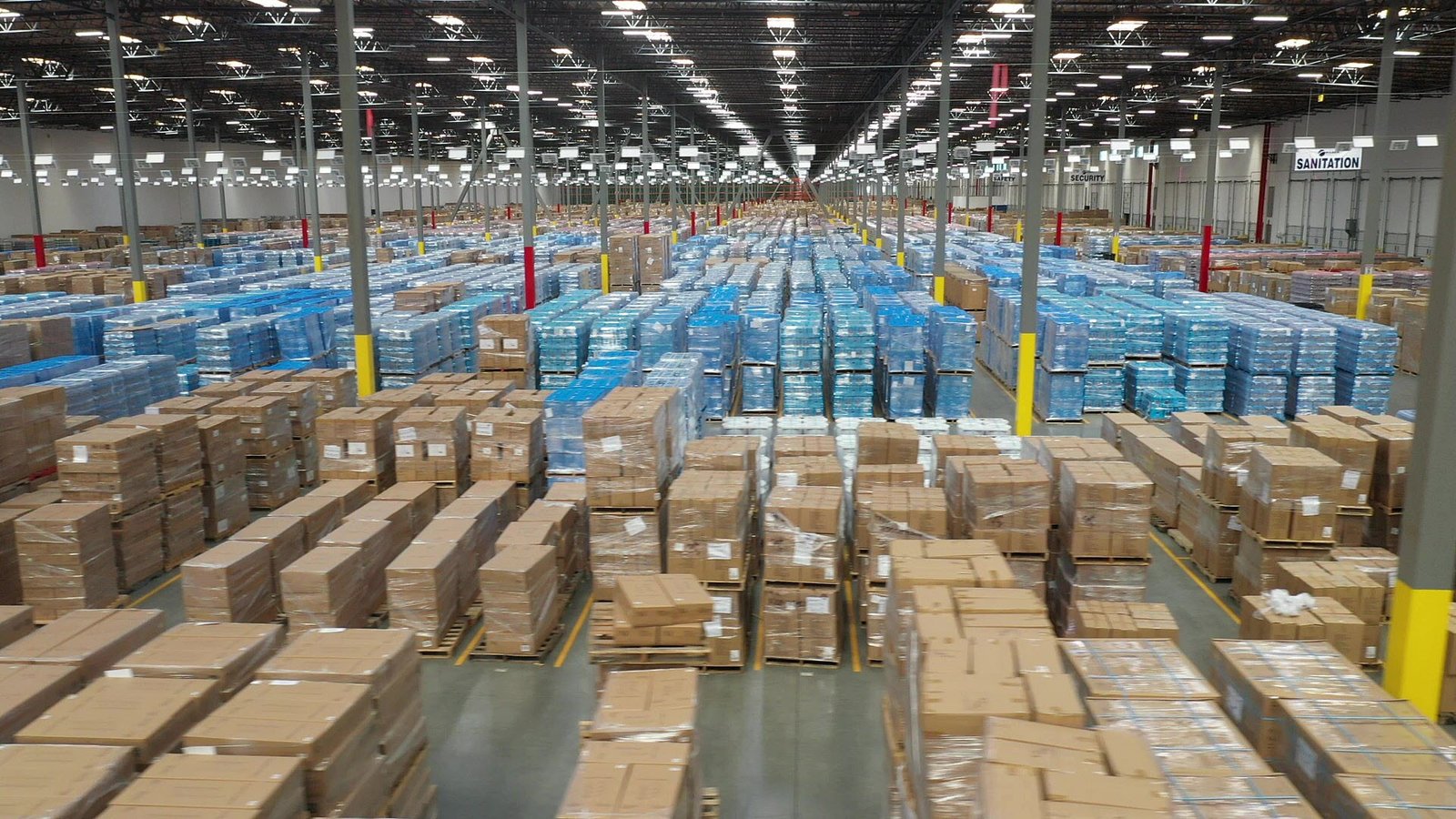
The logistics industry uses many building types. A warehouse stores goods for longer periods. A distribution center moves them through quickly. A truck terminal or cross-dock transfers freight between trailers with little storage. A fulfillment center handles individual orders with more labor, more lighting and more mezzanines.
The right choice depends on your product, your service level and your growth plan. Industrial manufacturers in the state, such as those described in our work with manufacturing owners, often need a small shipping building next to the plant. We can also help real estate groups, like the commercial developers who build spec buildings, design shells that serve more than one logistics user.
Show us your route and your volume
Send us the lane you serve, the building you need and the date it has to run. We will price the site, the slab, the shell and the yard, and we will tell you what a winter closure does to your operation. For cold-chain users and grocers, see retail chain projects as well.
Questions Owners Ask
How many docks and how much trailer parking do I need?
That depends on your throughput and dwell time. Many owners underestimate trailer parking. We help you test layouts with your operations staff and show what each extra door and each extra stall adds to cost. In Wyoming, add space for snow storage and for trucks held back by a road closure.
Is rail service worth paying for on a Wyoming site?
Only if you will use it. A rail spur adds land, grading, track work and coordination with the railroad. Cheyenne has the strongest rail position because Union Pacific and BNSF both operate railyards there. For most regional distributors, a highway-served site is cheaper and faster. We price both options so you see the difference.
What slab do I need for racking and forklifts?
The slab should be designed for the racking loads, the lift equipment and the required flatness. Tell us your rack manufacturer, tire type and aisle width early. We coordinate the slab design with the engineer and detail joints so forklifts cross them smoothly.
Can you build through winter?
Yes, with extra cost and planning. Foundations and slabs need blankets, heat and sometimes special mixes. Steel erection and tilt panel placement are limited by wind. We would rather agree on a winter allowance up front than argue about it later.
How far will you travel for a distribution project?
Anywhere in Wyoming. For sites near an interstate exit that is a long drive from the nearest large town, we mobilize a crew, set up a field office and price lodging and fuel into the bid. We also tell you which supplies will come from out of state and how long they take.