Structural Steel Erection in Wyoming
A steel crew in Wyoming starts the day by checking the wind. If the gusts at the top of the frame are over the limit, the iron stays on the ground. That rule costs a day now and then. It saves a crane, a column and sometimes a person. Structural steel is the fastest way to put up a large frame, and on the high plains the wind sets the pace as much as the fabricator does.
Design wind speeds are set by the local jurisdiction, and the values are not the same everywhere. Teton County lists a 105 mph basic wind speed, a 34 inch frost line and a minimum seismic design category D, and it points designers to the ASCE Hazard Tool for ground snow load. Those are mountain-valley numbers. On the plains and in the basins the criteria change, and so do the connections, bracing and base plates that have to match them.
We manage steel erection for manufacturing plants, shops, hangars and commercial frames, and we run the work as part of a larger job or as a stand-alone erection contract for owners who buy steel directly from a fabricator.
Wind holds, fall protection and cold hands
Rawlins has recorded temperatures from 98 F down to minus 36 F, with average snowfall of 54.1 inches a year. A steel crew works across that whole range. In summer the steel is too hot to hold bare-handed at noon. In January it is coated in frost and ice at sunrise. We plan fall protection, tie-off points and decking sequences for both, and we have the crew clear ice before anyone climbs.
Wind holds are called by our superintendent against a stated limit, not by feel. Loads with large sail area, such as long joists or wall panels, have a lower limit than a column. We brief the crane operator and the connectors every morning and stop the pick when the limit is passed. Safe sequencing also means bracing the frame as it goes up, so no bay is left standing without lateral support.
What erection includes
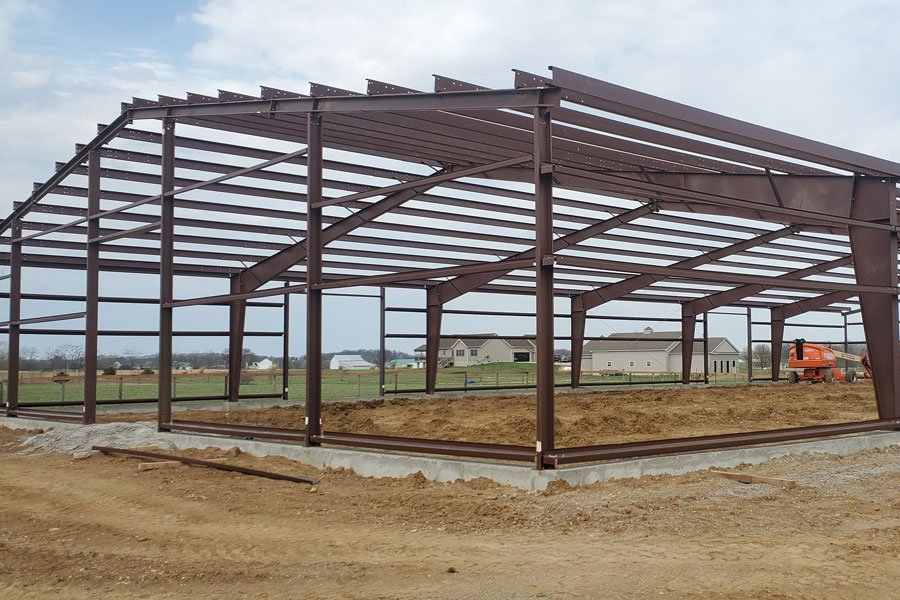
Erection starts with checking the anchor bolts and base plates the foundation crew has set. If the bolts are off, we find out before the steel arrives. Then we set columns, beams, girders and joists, plumb and align the frame, bolt or weld the connections and install the metal deck. Shear studs, bracing, stairs and railings follow.
We read the shop drawings against the contract documents before any piece is lifted. Mismatches caught on paper cost an email. Mismatches caught in the air cost a day. When we manage erection for another contractor, we coordinate with the fabricator on delivery order so the steel arrives in the sequence it will be set.
Crews that travel with the work
Steel erection in Wyoming means a crew that can travel. The site may be hours from the nearest town of any size, and a connector who has to drive home every night is a connector who loses two hours a day. We mobilize crews to the site, plan lodging and keep them there until the frame is done.
We schedule and supervise the erection, the decking and the field welding, and we bring in the crane that fits the pick. That avoids the finger-pointing that comes when the steel erector, the decker and the crane company are three different firms. Our tilt-wall construction work often has steel roof structure above the panels, and the same crew sets both. Owners in logistics and distribution who buy steel directly from a fabricator can hire us for erection alone.
Fabricator lead time and the weather window
Steel is on a long lead. Detailing, mill delivery and fabrication can take months, and the erection date is set by when the steel is ready, not when the foundation is. We help owners order steel early, sometimes before the permit is final, and we phase delivery so the building can be erected in the order it will be enclosed.
Once the steel is on site, the weather decides. We aim to have the frame up and the deck down before the worst of winter, so interior work can proceed under a roof. If the steel arrives in December, we plan cold-weather connection procedures and heated breaks for the crew.
How steel erection fits with the rest of the job
Steel meets concrete at the base plate, and a good erection depends on a good foundation. Our concrete foundations work and the steel erection are coordinated on bolt layout, grout thickness and elevation tolerances. For buildings with overhead cranes, the runway beams add a tighter tolerance, covered on our crane buildings page.
If your project is a simple, repetitive building, a pre-engineered metal building may be a better answer than a conventional frame. We will price both.
Codes, inspections and special inspection
Wyoming has no single statewide building code. The state adopted the 2024 International Codes on June 28, 2024, and cities with home rule, such as Sheridan, adopt the same family within six months to keep their own plan review and inspection. Each town or county decides its edition and amendments, so we check with the building department before we finalize the connection design.
Structural steel usually carries special inspection for welds and high-strength bolts. Inspectors may be hours away, so we schedule them in advance and keep the work moving so they can see completed connections in one trip.
Price your steel erection
Send the shop drawings or the plans and the site address. We will give you an erection price with mobilization shown separately.
Questions Owners Ask
How windy is too windy to erect steel?
There is no single number. The limit depends on the load, the crane and the manufacturer's guidance. As a rule, crane operators stop picks at moderate gusts, and we set a lower limit for large-sail pieces. We would rather lose a morning than rig a piece into a gust.
Can you erect steel in January?
Yes, with changes. We plan cold-weather welding with preheat, check bolt pretension procedures and keep the crew warm and supplied. Snow and ice must be cleared from the steel and deck before work starts. We tell owners when a particular scope is better left for spring.
Do you erect steel supplied by another contractor?
We do. We review the shop drawings and the delivery schedule, then set the steel under a stand-alone contract. The sooner we see the drawings, the more mistakes we catch before the steel is on site.
What does it cost to bring a steel crew to a remote site?
Mobilization, lodging, per diem and travel time are added to the erection price. A job three hours from the nearest town costs more per ton than one in town. We separate those lines in the bid so you can compare them.
Who inspects the welds and bolts on a remote job?
A special inspector hired by the owner or the engineer. We book them ahead because they may have to drive a long way, and we sequence the work so each trip covers as many connections as possible.