
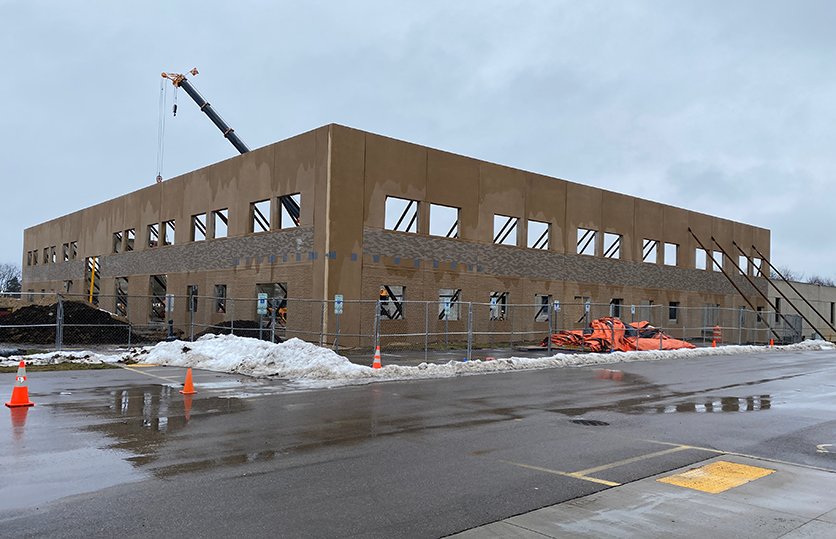
Education Facility Construction in Wyoming
A school cannot open late. The first day of class is set months ahead, buses are routed, teachers are hired and families have planned around it. That makes education work the least forgiving schedule in our trade, and in Wyoming it collides with the shortest building season. We build K-12 additions and renovations, college buildings and training facilities, and we plan every one backward from a date that will not move.
Most of our school work happens in summer, when students are gone and the weather is workable. That gives us one summer break to demolish, rebuild and clean a wing, and the margin for a missed delivery is close to zero. Winter work, when it happens, is indoors and tied to a heated, enclosed building. New schools and large additions begin earlier, so the structure is enclosed before the cold arrives and interiors finish through the winter.
Schools are public buildings paid for with public money, and the process reflects it. Competitive bidding, bonding, documented change orders and open records are normal. We run our books and our paperwork to a standard that holds up when a board member or auditor asks a question.
Campuses across a big, thin state
Wyoming's education buildings are scattered across a large territory. Eastern Wyoming College is in Torrington with a satellite campus in Douglas and outreach centers in Chugwater, Glendo, Guernsey, Hulett, Lusk, Moorcroft, Newcastle, Sundance, Upton and Wheatland, and its infobox lists 1,505 students. That is a campus network spread over hundreds of road miles, and each outpost needs its own building maintained and, over time, renewed.
In smaller communities, the school is often among the biggest employers. In Saratoga, the two largest employers are the U.S. Forest Service and Carbon County School District No. 2. A building project for that district matters to the whole town, and the contractor's conduct on site reflects on the community. We work in Torrington and Saratoga with that in mind, and we coordinate local trade partners and suppliers where we can.
The summer window and what fits inside it
We plan summer renovation work in layers. Abatement and demolition come first, followed by structure, rough-in and inspections, then finishes, furniture and cleaning. Every layer has a hard end date, and the next trade is waiting. A single late inspection can slide the whole wing. We coordinate with the building department to book inspections ahead and confirm availability for the final.
Long-lead items take priority. Rooftop equipment, boilers, controls, gym flooring, lockers, casework and science room fixtures all need orders placed during the school year. We help districts with early procurement strategies so those items arrive before the summer starts. For districts that need a gym, shop or bus barn on a tight budget, pre-engineered metal buildings are a fast and economical frame, and we finish them to look like part of the campus.
Security, students and the construction fence
The most important rule on a school site is separation. Construction traffic, workers and materials stay away from students and staff. On a campus that remains open, that means fences, separate gates, delivery times outside drop-off and pick-up, and a flagger when trucks cross a student route. We brief every worker on the rules and remove those who ignore them.
Modern schools also include security features that add scope. Secure vestibules, controlled entry, camera systems and communications gear are now standard. Fire alarm, sprinkler and emergency lighting systems must stay operational for occupied sections. We schedule every interruption with the school and notify the local fire authority when a system will be out of service.
Buildings we build for schools and colleges
Education scope includes classroom additions, gymnasiums, cafeterias, career and technical education shops, science labs, libraries, administration offices, athletic buildings, bus garages and maintenance buildings. Colleges add residence halls, student unions and lab buildings. Our student housing construction page covers the residential side of campus work.
Structure varies with the program. Gyms and multipurpose rooms need long clear spans that carry roof snow without interior columns. Classroom wings are light steel, masonry or wood frame, depending on budget. Shops need tall doors and heavy-duty slabs. The wind and snow criteria come from the local jurisdiction, and the design team sets them. Evanston's design load sheet, for example, asks for a 40 psf minimum snow load and 54 inch footings, while other jurisdictions publish different values, so we use the set that applies to your site.
What drives a school budget up or down
Public budgets leave little room for surprises, so we are blunt about where the risk is. Hazardous material in older buildings, such as asbestos in floor tile or lead in paint, can add cost and days once demolition opens the walls. We recommend a survey before design and an allowance for what it may miss. Structure and mechanical systems follow, since roof snow load, boiler capacity and ventilation rates for crowded rooms drive large line items.
Site and distance come next. A rural district may have no nearby batch plant, no electrical contractor within an hour and no hotel for a traveling crew. We price that honestly. We also show options that cut cost without cutting quality, such as simpler roof shapes, standard door and window sizes and repeated room modules. A district that makes a few design choices early often saves more than it would by negotiating unit prices later.
How districts and colleges buy construction
Public owners choose from several delivery methods. Competitive bidding is the traditional path, and it works well when drawings are complete and the budget is firm. Construction manager at risk and design-build arrangements bring a contractor in earlier and can protect a tight summer window. We work in whichever method the owner's rules allow and give a plain view of the tradeoffs.
Education institutions also own buildings that serve more than one purpose. A community gym that doubles as an emergency shelter, a library that serves both students and the public, or a college building used by an outside agency all affect design and code. Our team works regularly with education institutions and with the broader municipal and government construction community that shares those buildings. See also our school building type page.
Tell us the date the doors must open
Send the scope, the summer dates and the funding source. We will return a schedule that shows what fits in the window and what has to start earlier.
Questions Owners Ask
Can a classroom wing really be renovated in one summer?
Often, yes, when the scope is clear and long-lead items are ordered early. The work has to be planned in layers with firm dates for each. The plan breaks most often at inspections and at deliveries, so we schedule both with extra care.
How do you protect students during construction?
We separate the work site from the school with fencing, controlled gates and a delivery schedule that avoids arrival and dismissal times. Workers are briefed and badged. We also post an emergency contact and give the school office a direct line to the superintendent.
What happens if a delivery misses the opening date?
We have a plan for that. We identify items that can be installed after opening without disrupting classes, arrange temporary solutions for items that cannot, and keep the school informed about delivery status weekly. The best fix is early ordering, which is why we push for it.
Do you work with the bond or funding timeline?
Yes. Public funding often arrives in stages, and construction has to follow. We prepare cost estimates at each design milestone, flag changes that affect the budget and help the district time bidding and award to its funding calendar.
Is it practical to build a school in a remote community?
It is, if you plan for it. Crews need housing, deliveries take longer and some trades must travel. We include those costs in the estimate and look for local labor and suppliers to reduce them.