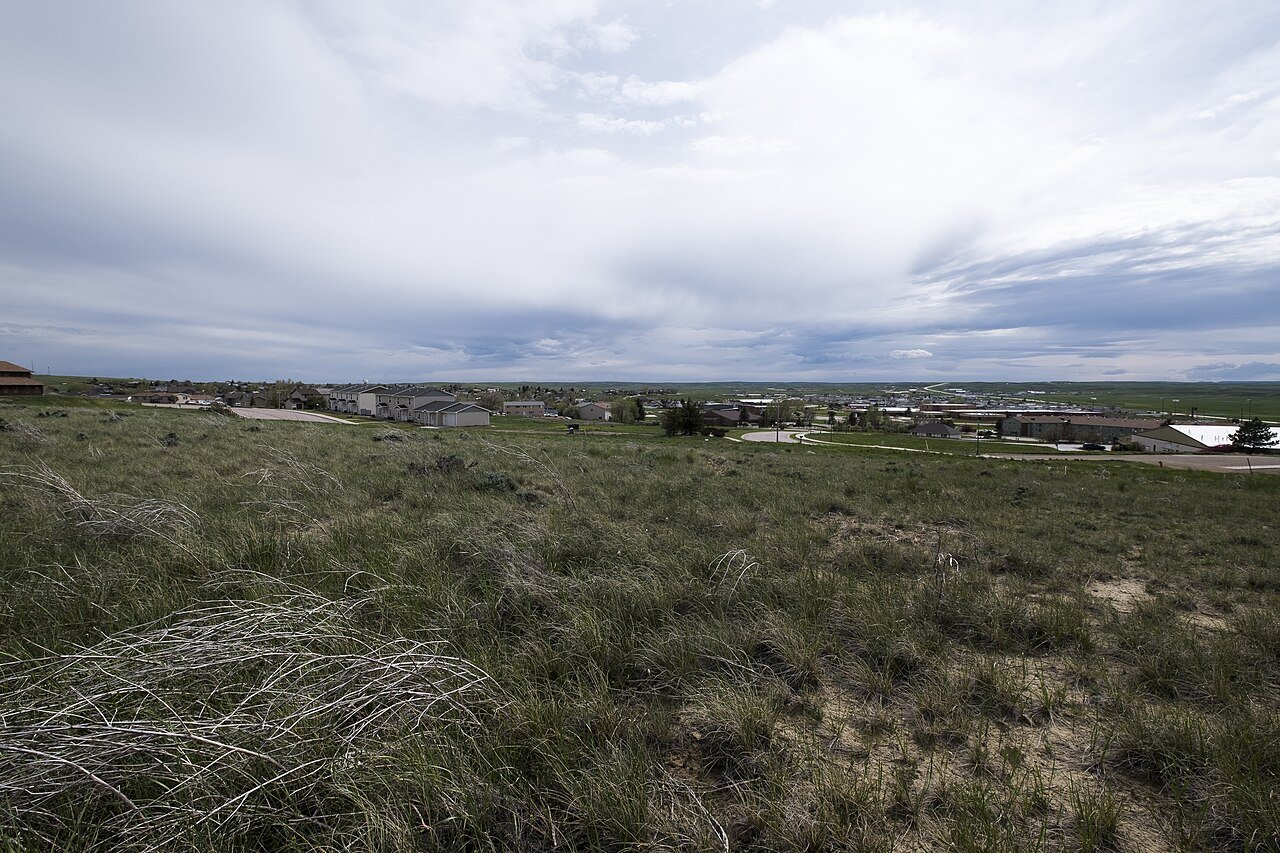
Shops, Yards and Town Buildings in Wright, Wyoming
If you are putting up a shop, an office or a public building in Wright, the first document we pull is the town's published minimum design load standards: 30 psf ground snow load, 90 mph wind speed with exposure C, seismic design category C, a 42 inch frost line depth and a 1900 air freezing index. Those five numbers set the footings, the roof, the bracing and the concrete protection plan. We design, price and build to them, and we show you what they cost.
Wright sits at 5,122 feet next to the Black Thunder Coal Mine, described as the largest mine in the Powder River Basin. The town grew from an Atlantic Richfield company housing development during the 1976 coal boom and was incorporated in 1985, so the building stock reflects one big wave of construction. Some of those buildings are now ready for renovation, and some lots are ready for something new.
The Black Thunder mine, opened in 1977 and owned by Core Natural Resources, produced 62,180,000 short tons in 2022, over 25 percent of Wyoming's total coal production. A producer that size supports a ring of contractors, suppliers and services that need shops, yards, offices and storage within a short drive of the mine. We build those shops and offices as pre-engineered metal buildings or conventional steel, and we build them with the ground and weather in mind. The frame, the slab and the envelope are designed together, so the parts do not fight each other when the wind loads the wall or the frost heaves the floor edge.
Foundations and slabs sized to the town standards
A 42 inch frost depth means footings go deep and freeze protection matters. We schedule and inspect the excavation, forming, placement and protection of concrete foundations, and the backfill uses compacted material that drains. Slabs on grade for shops are thickened under heavy equipment and tied to the footings, with isolation and control joints laid out before the pour. They are placed with blankets or enclosures when temperatures call for it.
The air freezing index of 1900 tells us winters here are long and cold. We use it as a planning number for concrete cure, frozen ground and heating cost. Our schedule leaves room for a hard freeze, and we do not pour on frozen subgrade. We also insulate under and around slabs when the use calls for a warm floor. Edge insulation at the slab perimeter is a small cost that cuts frost heave and heat loss together.
Working through town review
A small town reviews every submittal closely, and a thin one gets sent back. We submit complete drawings with the structural criteria stated on them, meaning the load standards above and the soils information, so the review is short.
The state adopted the 2024 International Codes on June 28, 2024, and cities and counties with local enforcement authority adopt their own editions and amendments. Wyoming has no single statewide commercial code enforced everywhere. We confirm with the town and with Campbell County which edition and which amendments apply to your lot, and we track inspections through the build.
Where the money goes
Foundations and enclosures are the first big cost items in Wright, because of the frost depth and the wind. A 90 mph exposure C design is not extreme by the standards of the state, but open ground on the plains is windier than it looks, and cladding and roof attachments are sized accordingly. We price those details exactly, not with a plug number.
Distance also counts. Materials and trades come from outside town, so we plan deliveries in loads and book subcontractors in blocks. Stormwater and drainage are another cost item, since a yard of any size needs grading and detention that suits the lot. We include that in the first estimate.
Reuse of industrial ground
Arch Resources' Coal Creek mine near Wright covers 11,500 acres. Campbell County commissioners approved rezoning nearly 1,500 acres of it heavy industrial, retaining the coal tipple, rail lines and buildings for future industrial tenants (January 2024). For a buyer, those acres come with rail, structures and heavy-industrial zoning already in place, and with condition issues no photo can show.
We evaluate that kind of ground before you put money in. We walk the structures, review soils and drainage, and compare the cost of reuse against a clean build. Developers and property management firms that hold industrial buildings can ask us for a condition and capital plan.
Safety next to the mine
Jobs near an active mine require coordination. We follow the site owner's access rules, wear the required protective equipment and avoid haul roads and blasting zones. Deliveries are scheduled to stay clear of shift change traffic, and construction crews do not park on haul routes.
Weather safety is just as important: wind chill, ice and limited daylight in winter. We provide heated break areas, de-ice access paths and keep lighting at the work area. For work in Gillette or Douglas, we set up the same plan so crews move between jobs without relearning the rules.
Build in Wright
Tell us what the building is for and where it sits. We will confirm the town's load standards, price the foundation and shell, and send a schedule that covers freezing weather.
Questions Owners Ask
What are Wright's design loads?
The Town of Wright publishes minimum design load standards of 30 psf ground snow load, 90 mph wind speed with exposure C, seismic design category C, a 42 inch frost line depth and a 1900 air freezing index. Your engineer should confirm them for your building and your lot before drawings are final.
Can I buy a piece of the former Coal Creek site?
That depends on the owner and the county's process. The commissioners approved rezoning nearly 1,500 acres of the Coal Creek mine heavy industrial and retained the coal tipple, rail lines and buildings for future tenants. We can evaluate any parcel for you, including condition, utilities and likely construction cost.
How far is the nearest big supplier from a Wright site?
Wright is a small town, so many large orders come from other places and arrive by truck. We plan deliveries and storage on site, and we price the haul separately.
Do you build offices as well as shops?
Yes. Many owners want an office, a break room, a parts counter and a shop under one roof. We build them together with separate heating zones so the shop can run cooler than the office.
Does the seismic category affect a small shop?
Seismic design category C sets bracing and connection requirements for the frame and the walls. For a single-story steel building the effect is modest, but it still shapes the lateral system, the base plate details and the anchor rod layout. Your engineer will carry it into the drawings, and we check the field work against them.
How long does a typical shop take to build?
A pre-engineered shop of moderate size can be erected in a few months once steel is on site, but design, permits and steel delivery often take longer than erection. Starting early in the year gives the best chance of finishing before winter.